

My last post delved into the intricacies of insider trading law via a set of hypotheticals based on LeBron James signing with the NY Knicks.

It elicited a response from Francine McKenna of the estimable Substack The Dig.

Ms. McKenna commented:
I’d love for you to go back and analyze the Sokol case with this framework
For those who weren’t in the biz in 2011 and/or have forgotten, back in 2011 the WSJ reported that:
David Sokol, widely seen as the leading contender to succeed billionaire Warren Buffett at the helm of Berkshire Hathaway Inc., defended himself Thursday morning after resigning unexpectedly amid surprising revelations about his personal stock trading.
In an unusual and personal announcement Wednesday evening, Mr. Buffett said the resignation followed revelations that Mr. Sokol had purchased roughly $10 million in shares of a chemicals company that Berkshire recently agreed to buy at the suggestion of Mr. Sokol, Lubrizol Corp.
“I don’t believe I did anything wrong,” Mr. Sokol said in an interview on CNBC. “I don’t think you can ask executives not to invest their own families’ capital.” ...
Mr. Buffett said Mr. Sokol, 54 years old, had bought 96,060 shares in January, before Berkshire reached a $9 billion deal to acquire the company. Berkshire’s purchase price of $135 per share meant that Mr. Sokol’s stake rose $3 million in value. ...
Securities lawyers debated whether Mr. Sokol’s dealings could fallinto a gray legal area. In broad terms, insider trading laws prohibit individuals from trading on shares based on material nonpublic information in violation of some duty of trust.
Basically, Sokol planned to pitch Buffett on having a Berkshire energy subsidiary (of which Sokol was then CEO) buy Lubrizol, a chemical company in the petrochemical space.
On December 13, 2010, Sokol met with Citigroup bankers to discuss possible takeover targets. Sokol reportedly expressed interest solely in Lubrizol. A Citigroup banker subsequently informed Lubrizol management of Sokol’s interest.
Between January 5 and 7, 2011, Sokol bought 96K shares of Lubrizol stock at prices in the $104 range. He pitched the acquisition to Buffett on or about January 14th and again in late January after a meeting with Lubrizol’s CEO.
On March 13, Berkshire’s board approved an offer for Lubrizol at $135 per share. Somewhere around that time, Sokol cashed out, earning a profit of around $3 million. When that came to light, Sokol resigned from Berkshire.
Buffett initially said he did not believe Sokol had broken the law, but later said he found Sokol’s conduct "inexplicable" and "inexcusable."
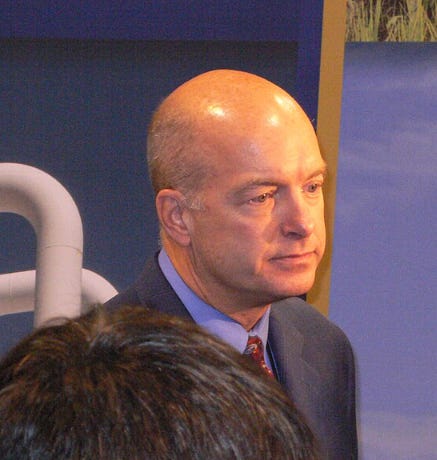
But was it illegal?
For a detailed overview of the law of insider trading and the policy rationale for regulating insider trading, see my book Insider Trading Law and Policy (2d ed. 2023) (AMAZON LINK).