

In 1926, the New York World published a wonderful poem. “On Waiting in Vain for the New Masses to Denounce Nonvoting Stocks”:
Then you who drive the fractious nail,
And you who lay the heavy rail,
And all who bear the dinner pail
And daily punch the clock—
Shall it be said your hearts are stone?
They are your brethren and they groan!
Oh, drop a tear for those who own
Nonvoting corporate stock.
In the early 1900s, it was becoming increasingly common for companies to have two classes of common stock: one with full voting rights on a one vote per share basis, the other with no voting rights (but perhaps with greater dividend rights).
Although these disparate voting right capital structures were popular with managers (who tended to own the bulk of the voting shares), and investors showed a surprising willingness to purchase large amounts of nonvoting common stock, an increasingly vocal opposition emerged in the 1920s. Hence, the poem, which mocked the leftists of the day for opposing corporate capitalism, while largely ignoring the fine details of how corporate capitalism actually worked. (The New Masses was a Marxist journal of the day.)
William Z. Ripley, a Harvard professor of political economy, was the most prominent (or at least the most out-spoken) proponent of equal voting rights. According to Ripley, nonvoting stock was the “crowning infamy” in a series of developments designed to disenfranchise public investors. (You might say he was the Lucian Bebchuk of the day.)
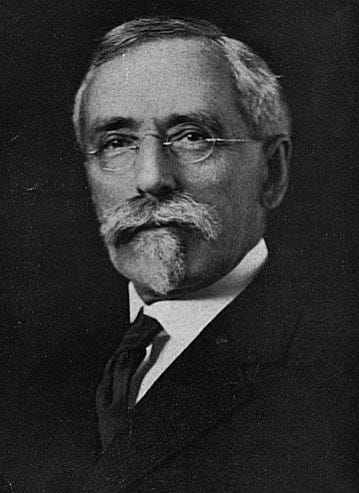
William Z. Ripley
The opposition to nonvoting common stock came to a head with the New York Stock Exchange’s (NYSE) 1925 decision to list Dodge Brothers, Inc., for trading. Dodge sold a total of $130 million worth of bonds, preferred stock, and nonvoting common shares to the public. Dodge was controlled, however, by an investment banking firm, which had paid only $2.25 million for its voting common stock. In January 1926, the NYSE responded to the resulting public outcry by announcing a new position:
Without at this time attempting to formulate a definite policy, attention should be drawn to the fact that in the future the committee, in considering applications for the listing of securities, will give careful thought to the matter of voting control.
This policy gradually hardened, until the NYSE in 1940 formally announced a flat rule against listing nonvoting common stock. Although occasional exceptions arose, the most prominent being the 1956 listing of Ford Motor Company despite its dual class capital structure, the basic policy remained in effect until the mid-1980s.
In the middle of that epic decade—the era of Ronald Reagan, great music, and yuppiemobiles—we were experiencing a boom in hostile takeover bids. It was the era of corporate raiders, white knights, poison pills, and LBOs. Greed is good was the motto of the day.
So companies began trying dual class recapitalizations in which they created two classes of stock: typically a class with one vote per share and a class with ten votes per share. Through various ways, companies arranged things so that insiders held most of the super voting rights stock and outsiders held the lower voting rights stock. If successful, the dual class recap would leave the insiders with voting control. The ultimate takeover defense. Insiders who cannot be outvoted, after all, cannot be ousted.
FYI
I discuss dual class recapitalizations and their use as a takeover defense in much more detail in Stephen M. Bainbridge, The Short Life and Resurrection of SEC Rule 19C-4, 69 Wash. U. L. Q. 565 (1991).