

This is the third post in my series on corporate philanthropy. We started with the backstory of the leading case of AP Smith Mfg. v. Barlow and then dived into the law and economics of corporate philanthropy generally.
A.P. Smith Mfg. Co. v. Barlow and Corporate Philanthropy

I’m working on a post on corporate philanthropy, but it occured to me that I should lay the groundwork for that post by talking about the leading “corporate social responsibility” case; i.e., A.P. Smith Mfg. Co. v. Barlow.
Corporate Philanthropy

According to the Giving USA 2025 Report, donations to US charities hit a new record high in 2024, totalling $592.5 billion dollars. Over $44 billion of that total (7.5%) came from for-profit corporations, also a new record high. Total corporate profits that year totalled $4 trillion, yet another a record high, so corporate giving amounted to approximately 1.1% of corporate earnings. Not exactly tithing.
In this post, I’m using a 2020 COVID-era tweet by Jon Miller as a jumping off point:
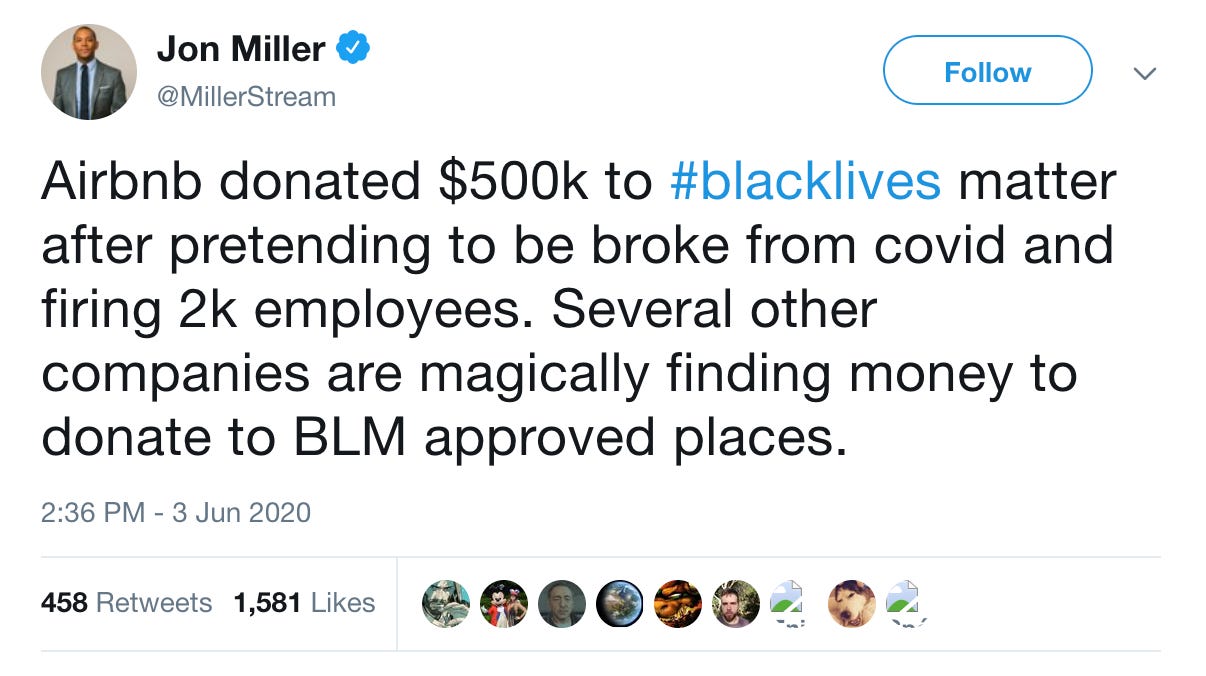
I didn’t follow Miller back then (and still don’t) but some friends who did sent me a link to the tweet, figuring it would interest me.
Miller’s X.com profile now describes him as: “Gamer Jon’s Dept. • Veteran journalist • Catholic • Moderate • Fair & balanced political commentator • provider of parody.” But back then it described him as:
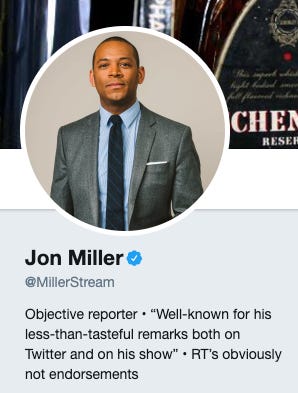
At the time, his tweet struck me as being deliberately written in a way that would appeal to a certain political tribe (i.e., those that wear MAGA hats), but maybe it was parody. IDK.
In any event, setting aside the politics of the tweet,1 it actually raises an interesting question; namely, when a firm is in sufficient distress that it is laying off employees, should it be engaged in corporate philanthropy? More generally, suppose a corporation’s board of directors is considering making a substantial donation to a charitable organization. At that time, the corporation is in considerable financial distress. It may well fail to survive. If so, should the directors go forward with the donation? If they do, what recourse do the shareholders have?
Of course, that question is a subset of the broader issue of how we reconcile competing stakeholder claims. I suggest that there are two possible answers to this claim.
As it turned out this post proved to be very long, so I broke it into two halves. Look for the second half tomorrow.