

In two earlier posts, I addressed Delaware Vice Chancellor Lori Will’s recent decision in Brola v. Lundgren,1 which held a corporate director and officer who committed sexual harassment could not be held liable in a derivative action for breach of the fiduciary duty of loyalty :
The core issue is whether corporate law can be broadened to encompass interpersonal workplace disputes. It cannot.
I assume the reader is familiar with those posts.

In reaching her decision, VC Will necessarily had to take into account Vice Chancellor Travis Laster’s 2023 decision in In re McDonald’s Corp. Stockholder Derivative Litigation.2 Accordingly, before getting into why I think Brola was correctly decided, it seems appropriate to revisit the McDonald’s decision.
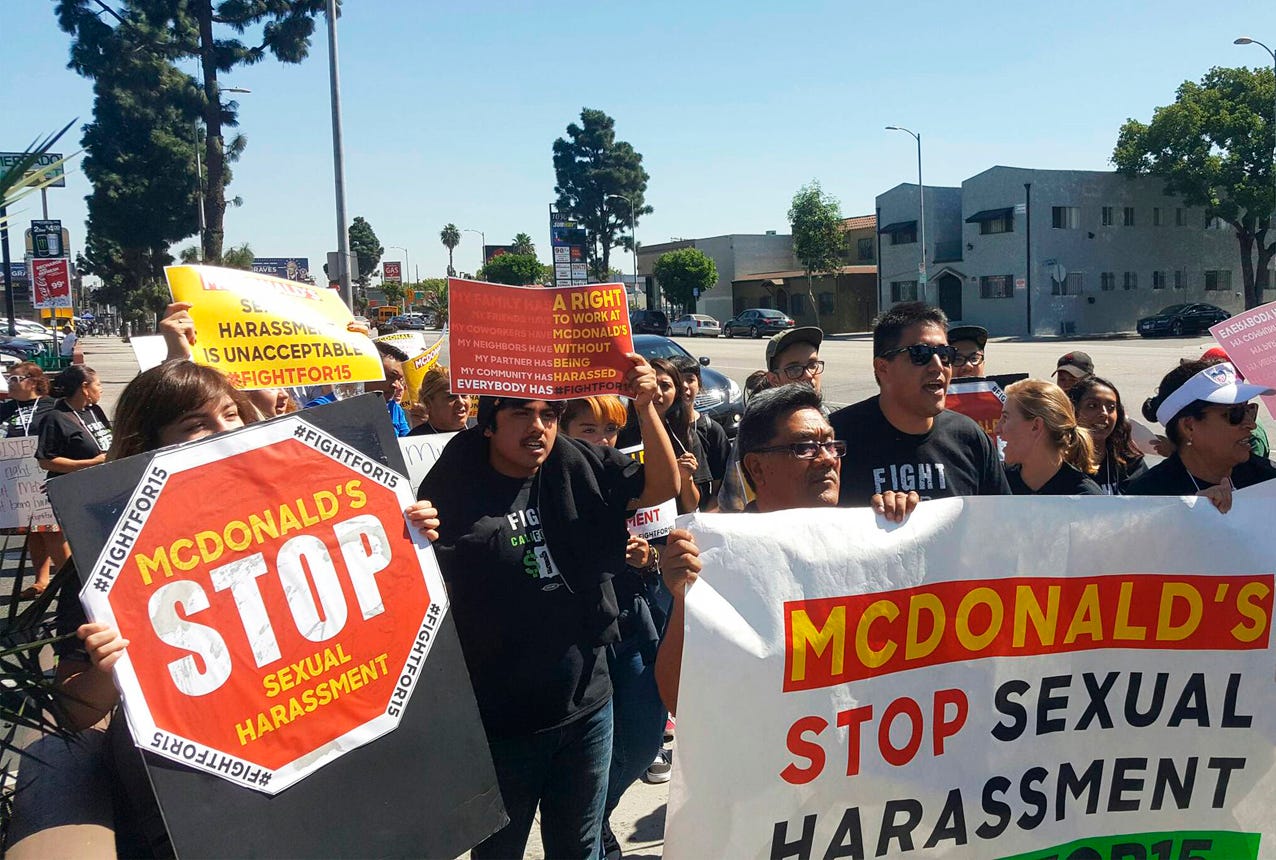
In that case, plaintiffs alleged that that McDonald’s chief Human Resources executive (Fairhurst) ignored red flags about a culture of sexual harassment in certain McDonald’s locations and that Fairhurst himself committed sexual harassment against McDonald’s employees.
Note that the plaintiffs were not themselves victims of Fairhurst’s misconduct but rather shareholders of McDonald’s.
The plaintiffs sued Fairhurst for breach of the duty of oversight under the Caremark line of cases3 and for breaching his duty of loyalty by engaging personally in acts of sexual harassment.
As to the first claim, Laster’s opinion is long, with an exhaustive history of Caremark’s evolution. But there are three paragraphs that nicely capture the gist of his analysis:
This decision clarifies that corporate officers owe a duty of oversight. The same policies that motivated Chancellor Allen to recognize the duty of oversight for directors [in In re Caremark International Inc. Derivative Litigation] apply equally, if not to a greater degree, to officers. The Delaware Supreme Court has held that under Delaware law, corporate officers owe the same fiduciary duties as corporate directors, which logically includes a duty of oversight. Academic authorities and federal decisions have concluded that officers have a duty of oversight.”
The fact that corporate directors owe a duty of oversight does not foreclose officers from owing a similar duty. Just as a junior manager with supervisory duties can report to a senior manager with supervisory duties, so too can an officer with a duty of oversight report to a board of directors with a duty of oversight. And just as a senior manager with supervisory duties can hold a junior manager accountable for failing to fulfill the junior manager’s supervisory duties, so too can a board with a duty of oversight hold an officer accountable for failing to fulfill the officer-level duty.”
Although the duty of oversight applies equally to officers, its context-driven application will differ. Some officers, like the CEO, have a company-wide remit. Other officers have particular areas of responsibility, and the officer’s duty to make a good faith effort to establish an information system only applies within that area. An officer’s duty to address and report upward about red flags also generally applies within the officer’s area, although a particularly egregious red flag might require an officer to say something even if it fell outside the officer’s domain. As with the director’s duty of oversight, establishing a breach of the officer’s duty of oversight requires pleading and later proving disloyal conduct that takes the form of bad faith.
At the end of the opinion, Laster turned to the second issue; namely, whether Fairhurst’s personal misconduct violated the duty of loyalty. He concluded that it did:
When Fairhurst engaged in sexual harassment, he was not acting subjectively to further the best interests of the Company. He therefore was acting in bad faith. The allegations against Fairhurst accordingly support a claim for breach of the duty of loyalty.
Because of the obvious relevance of the McDonald’s decision—especially the latter holding—to the facts of Brola (as noted, I assume the reader has or will read the first post in this series, which laid out those facts), this post explains why I think McDonald’s was wrongly decided.